
What Does Creatine Do for Women? A Simple, Honest Guide
In short: creatine does the same thing for women as it does for men — it helps your muscles produce energy for short, intense efforts, so you can get more out of the hard parts of a workout. It won't make you bulky, and it doesn't turn into fat. If you've only ever seen creatine marketed to male gym-goers, here's what it actually offers women.
First, what creatine actually is
Creatine is a natural compound your body already makes and stores in your muscles, where it's used to fuel short, hard efforts — think a heavy set, a sprint, or the last few reps of a workout. You also get small amounts from foods like red meat and fish. A creatine supplement simply tops up those stores so your muscles have more fuel on hand.
It's worth knowing that women naturally tend to have lower creatine stores than men and often eat less of it through diet — which is part of why topping up can be genuinely worthwhile.
Does creatine work the same for women?
Yes. The way creatine works isn't different between men and women, and it's one of the most researched supplements there is. It's also one of the very few with an authorised UK and EU health claim: creatine increases physical performance in successive bursts of short-term, high-intensity exercise (at a daily intake of 3 g). That benefit applies to women just as it does to men.
What women can expect: strength and performance
The clearest, best-evidenced benefit is performance. With creatine in your muscles, you may be able to push a little harder in short, intense efforts — an extra rep or two, a bit more power — which, over weeks of consistent training, can add up to real strength gains. You're not getting an instant lift so much as a slightly higher ceiling to train against.
Will it make me bulky? No
This is the worry that stops a lot of women trying creatine, so let's be clear: creatine will not make you bulky. Building large, obvious muscle takes years of dedicated, progressive training and is hard to do on purpose — a supplement won't do it to you by accident. What creatine is authorised to do is one specific thing: increase physical performance in short, high-intensity efforts. Any change in how you look comes from the training you put in, not from the powder itself.
"But won't it make me gain weight?"
You may see the scale rise by around 1–2 kg early on — but that's water drawn into your muscles, not body fat, and it's a normal part of how creatine works. It settles, and any further changes on the scale come down to your training and diet over time. We've covered exactly what's happening in our guide to choosing a creatine for women, which is worth a read if the scale matters to you.
Is creatine safe for women?
For healthy adults, creatine monohydrate is one of the most studied and well-tolerated supplements available, taken safely by millions of people over decades of research. As with any supplement, if you're pregnant or breastfeeding, have a kidney condition, or take medication, check with your GP before starting.
And if you've heard that creatine thins your hair, that's another myth worth clearing up — the current evidence doesn't support it, as we explain in our guide to creatine and hair loss.
What about ageing and menopause?
Beyond exercise, researchers are increasingly interested in creatine's role in healthy ageing — including muscle maintenance and, more recently, cognitive function — particularly for women in midlife and around menopause. This is a genuinely active and exciting area of study, though it's still developing, so it's best thought of as "promising research to watch" rather than settled fact. The well-established benefit today remains exercise performance.
How to take it (it's simple)
- Dose: 3–5 g a day. There's no need for a separate "loading" phase — a steady daily serving works perfectly.
- Timing: whenever suits you. Daily consistency matters far more than the exact time.
- Type: plain creatine monohydrate is the gold standard — the form used in most of the research. You don't need fancier, pricier versions.
- How: unflavoured creatine stirs into water, juice, a smoothie or your morning coffee and is virtually tasteless.
The bottom line
Creatine isn't a "men's" supplement — it's one of the few with a genuine, authorised performance benefit, and it works just as well for women. Expect better-quality training in short, intense efforts, and a small, harmless water-weight shift early on — not bulk, and not fat. If you train and want more from your sessions, it's one of the simplest, best-evidenced additions you can make.
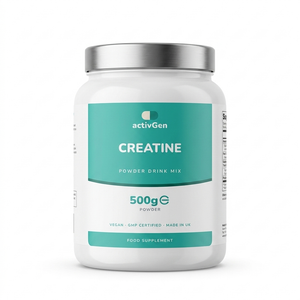
Want a clean, simple creatine to start with? activGen's creatine monohydrate is pure, unflavoured, 5 g per serving, with no fillers — honestly dosed and made in the UK.
This article is for general information and education only. It is not medical advice. Food supplements should not be used as a substitute for a varied, balanced diet and a healthy lifestyle.