
Does Creatine Make You Gain Weight? What the Science Actually Says
Short answer: yes, creatine can make the number on the scale go up — but it's water held inside your muscles, not body fat. For most people that's a gain of around 1–2 kg in the first week or two, and it's a normal, harmless part of how creatine works. Here's exactly what's happening, how much to expect, and why it's nothing to worry about.
Why the scale goes up
Creatine works by helping your muscles top up their stores of phosphocreatine — the fuel they tap into for short, hard efforts like a heavy lift or a sprint. To hold that extra creatine, your muscle cells also pull in a little extra water. This is called intracellular water retention, and it's the reason the scale moves.
The key word is inside. This isn't the puffy, under-the-skin bloating people worry about — it's water drawn into the muscle itself, which is part of what makes creatine effective in the first place.
How much weight, and how fast?
It depends on how you start:
- With a "loading" phase (around 20 g a day, split into doses, for 5–7 days), muscles saturate quickly and you may see 1–2 kg appear within the first week.
- Without loading (just a steady 3–5 g a day), the same saturation happens more gradually over three to four weeks, so the weight change is slower and gentler.
Either way you end up in the same place — loading just gets you there faster. If the quick jump bothers you, skip the loading phase and take a daily 5 g serving instead.
Is any of it fat? No.
Creatine contains no calories and is not a fat-storage signal of any kind. It cannot, by itself, add body fat. If your weight rises after starting creatine, it's water first — and later, potentially, muscle you build through training.
Water weight now — and what happens over time
Here's the part that reframes the whole question. The early gain is water. Creatine's authorised benefit is a specific one — it increases physical performance in successive bursts of short-term, high-intensity exercise, at a daily intake of 3 g. That's one of the very few authorised UK and EU health claims for any supplement, and it's why creatine is so heavily researched. What you do with that performance — the training itself — is what shapes your body over time. The powder fuels the effort; the effort does the work.
So yes, your bodyweight may climb over time — first as water, and later potentially as muscle you build through training. The scale is simply a poor tool for measuring that kind of change. A tape measure, the mirror, or how your training feels will tell you far more.
"Will creatine make me bulky?" — especially for women
This is one of the most common worries, and the answer is no. Creatine doesn't cause fat gain, and it won't make you "bulky." Building noticeable muscle takes sustained, progressive training and is genuinely hard to do — a supplement won't do it to you by accident. If you want the fuller picture, we've covered it in our guide to what creatine does for women.
How to keep the water-weight jump small
- Skip loading. Take a steady 5 g a day from the start.
- Stay consistent, not aggressive. Daily consistency matters far more than big doses.
- Drink enough water. Good hydration helps your body manage the shift comfortably.
- Give it time. The initial change levels off within a couple of weeks.
The bottom line
Creatine can make you gain weight — but it's water inside your muscles, not fat — usually around 1–2 kg early on. Over time, any further change comes from the training the creatine helps fuel, not from the powder itself. For most people that early shift is a sign it's working, not a reason to stop. If the scale matters to you, judge progress by how you look, feel and perform rather than by weight alone.
A quick note: creatine is well tolerated by most healthy adults, but if you have a kidney condition, are pregnant or breastfeeding, or take medication, check with your GP before starting any new supplement.
Heard a different scare story about creatine? We've also looked at whether creatine causes hair loss — another myth that doesn't hold up once you check the research.
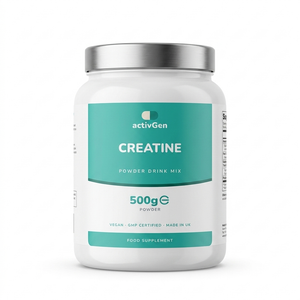
Looking for a clean creatine to start with? activGen's creatine monohydrate is pure, unflavoured, 5 g per serving, with no fillers — honestly dosed and made in the UK.
This article is for general information and education only and is not medical advice. Food supplements are not a substitute for a varied, balanced diet and a healthy lifestyle.