
Marine Collagen Benefits: What to Look For in a UK Marine Collagen Powder
Marine collagen has become one of the UK's most-searched supplements — but the most useful thing to know before you buy is what the label can, and cannot, honestly tell you. If you have typed “marine collagen benefits” into a search bar lately, you have probably noticed a gap between glossy marketing and the careful wording on a compliant product. This guide closes that gap: what marine collagen actually is, how it is made, how it compares with bovine collagen, and exactly what to look for in a quality UK marine collagen powder.

What is marine collagen, and how is it made?
Collagen is the most abundant structural protein in the body. Marine collagen is collagen sourced from fish — usually the skin and scales — which would otherwise be a by-product of the seafood industry. To turn it into a supplement, the raw collagen is cleaned and then put through a process called hydrolysis, which breaks the long collagen strands into much smaller fragments known as collagen peptides.
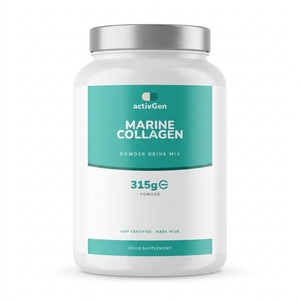
This is why you will see the term hydrolysed collagen (or “collagen peptides”) on better products. Hydrolysed marine collagen dissolves easily in cold or warm liquid and is largely tasteless, which is why it works well as a daily drink. activGen's Marine Collagen – Glow & Renew, for example, is a hydrolysed marine collagen powder providing 9g per serving in a refreshing orange & mango drink, with 30 servings per 315g tub.
What do “marine collagen benefits” actually mean under UK rules?
Here is the part most articles skip. In Great Britain, health claims on foods and supplements are tightly controlled by the GB Nutrition and Health Claims Register. Collagen itself does not currently hold an authorised health claim — which means a compliant UK brand cannot legally tell you that collagen reduces wrinkles, firms skin, thickens hair or supports your joints, however common those statements are online.
So when you research marine collagen benefits, treat any direct “collagen does X” promise with healthy scepticism. What is permitted relates to specific vitamins and minerals that are often added to collagen formulas. The clearest example is vitamin C, which carries the authorised claim that “vitamin C contributes to normal collagen formation for the normal function of the skin”, and also that “vitamin C contributes to the normal function of the immune system”. That is one reason thoughtful formulas pair collagen with vitamin C — both the Marine Collagen – Glow & Renew and the capsule-based Collagen Beauty include it.
In beauty-focused blends you may also see biotin and zinc, which do carry authorised claims: “biotin contributes to the maintenance of normal hair and normal skin” and “zinc contributes to the maintenance of normal hair, skin and nails”. Note that these benefits belong to the named nutrient — not to the collagen.
Marine collagen vs bovine collagen: what is the difference?
“Marine collagen vs bovine collagen” is one of the most common questions UK shoppers ask, so it is worth a plain answer. Bovine (cow-derived) collagen is typically rich in type I and type III collagen and is usually the lower-cost option. Marine collagen is predominantly type I, the form most associated with skin and connective tissue, and its peptides tend to be smaller. It is also the natural choice for pescatarians and anyone avoiding beef or pork for dietary or religious reasons — activGen's marine range is Halal certified.
Neither is “better” in a way the law lets us claim for a specific outcome; the right pick comes down to source preference, format and the rest of the formula. If you would rather avoid animal sources entirely, collagen is not for you — in that case a vitamin C source such as our Liposomal Vitamin C is the nutrient that genuinely carries the “normal collagen formation” claim.
What should you look for in a marine collagen powder?
Use this checklist to compare any marine collagen powder — not just ours — against what actually matters.
| What to look for | Why it matters | activGen Marine Collagen – Glow & Renew |
|---|---|---|
| Collagen type & source | Marine collagen is mainly type I; a named source helps you judge quality. | Hydrolysed marine collagen (fish) |
| Hydrolysed / peptides | Hydrolysis makes the peptides easier to mix and keeps the drink tasteless. | Yes – hydrolysed peptides |
| Dose per serving | Lets you compare like for like, rather than guessing from the tub size. | 9g per serving |
| Servings per tub | Tells you the real cost per day, not just the headline price. | 30 servings (315g) |
| Added vitamin C | Vitamin C is the nutrient that legitimately contributes to normal collagen formation. | Includes vitamin C |
| Format you will stick to | The best supplement is the one you take consistently — drink or capsule. | Orange & mango drink |
| Made & certified | UK manufacture and GMP certification signal quality control. | GMP certified, made in the UK |
Price is worth reading per serving rather than per tub. At £23.99 for 30 servings, the Marine Collagen works out at roughly 80p per daily drink — a fair benchmark to hold other powders against.
How do people use marine collagen day to day?

Most people treat marine collagen as a simple daily habit. A flavoured powder like Glow & Renew is usually stirred into cold water or juice and taken once a day — many find first thing in the morning or alongside breakfast the easiest to remember. If you prefer not to drink it, a capsule format such as Collagen Beauty offers marine collagen with biotin, zinc and vitamin C in two capsules, while Collagen Complex + pairs collagen with glucosamine in a sweet-orange drink. Consistency matters far more than the exact time of day.
Marine collagen FAQs
Is marine collagen suitable for vegetarians or vegans?
No. Marine collagen is derived from fish, so it is not suitable for vegetarians or vegans. If you avoid animal sources, focus instead on a vitamin C supplement, since vitamin C is the nutrient that contributes to normal collagen formation in the body.
Marine collagen vs bovine collagen – which should I choose?
Both are quality animal-sourced options. Marine collagen is mainly type I with smaller peptides and suits those avoiding beef and pork (activGen's is Halal certified); bovine collagen offers type I and III and is often cheaper. Choose on source preference, format and the wider formula.
How much marine collagen is in a serving?
It varies widely between brands, which is exactly why the dose per serving is worth checking. activGen Marine Collagen – Glow & Renew provides 9g of hydrolysed marine collagen per serving.
When is the best time to take marine collagen?
There is no required time of day. Pick a moment you will remember consistently — for many people that is with breakfast. Daily consistency is the most important factor.
Why is vitamin C often added to collagen supplements?
Because vitamin C carries an authorised health claim that it contributes to normal collagen formation for the normal function of the skin. It is the nutrient doing the permitted heavy lifting, which is why you will find it in our Marine Collagen and Collagen Beauty formulas.
activGen Marine Collagen – Glow & Renew is a hydrolysed marine collagen powder with added vitamin C, providing 9g per serving in a refreshing orange & mango drink — 30 servings per 315g tub, GMP certified and made in the UK. See the full formula.
📩 Want the no-hype version delivered to you?
We're building an honest, jargon-free library on the supplements everyone's talking about — what the evidence actually says, minus the marketing. Join the activGen list (sign-up's at the bottom of the page) and we'll let you know when new breakdowns land.
This article is for general education only and is not medical advice. Food supplements are not a substitute for a varied, balanced diet and a healthy lifestyle. If you are pregnant, breastfeeding, taking medication or have a medical condition, speak to a healthcare professional before starting a new supplement.